Pedaling Through the Quiet Ruins: The Mining Ghost Towns You'll Roll Right Past
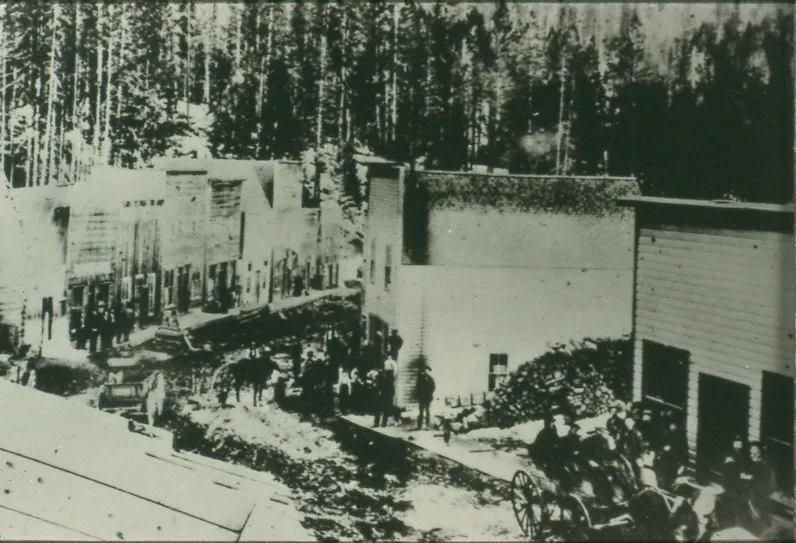
Photo: mypubliclands, Public domain, via Wikimedia Commons
There's a moment on the fondo route—somewhere past the second feed zone—where the road bends and you catch it: a cluster of collapsed cabins, a rusted ore cart half-swallowed by sagebrush, a tailings pile that's been sitting there since before Montana was a state.
Most riders hammer past. That's fine. But if you've ever wondered what all that rubble was for, this one's for you.
Why Montana Is Littered with Ghost Towns
The short version: silver, gold, and a national panic.
In the 1860s through the 1880s, prospectors swarmed the mountains around Bozeman and the greater Gallatin and Madison river drainages chasing placer gold and, later, rich silver lodes. Boomtowns sprang up almost overnight—saloons, schools, newspapers, opera houses, the works. Some of those camps grew into cities.
Then came the Sherman Silver Purchase Act repeal in 1893. Silver prices collapsed, banks called their loans, and thousands of mining camps went from boom to bust in the space of a few seasons. People left. They left so completely that they left their furniture, their pianos, and in some cases their mail still sitting on the table.
The ruins you see along the route are the leftovers of that whiplash—communities that went from thriving to abandoned in under a decade.
What You're Actually Looking At
The tailings piles. Those pale, braided hills of loose rock beside the creek drainages? That's processed ore—the waste left over after mills extracted what was valuable. They look almost like snow from a distance, and they're the single most reliable indicator that a camp once stood nearby.
The collapsed cabins. Log structures rot from the roof down. A squared-off mound of logs with a doorframe still standing was probably a one-room home for a miner, his wife, and often six kids. The larger, more substantial ruins near the road were typically commercial—saloon, assay office, or general store.
Rusted headframes and machinery. If you spot a skeletal wooden or steel tower, that's a mine headframe, the structure that lowered men and raised ore up the shaft. The scattered iron beasts around it are boilers, stamp mills, and ore crushers—machinery that was often too heavy to haul away when the camp died, so they simply walked away from it.
The cemeteries. Look up, not out. Mining camps buried their dead on the nearest dry bench above town, usually marked by a simple fence. If you ever do a pre-ride or slow-roll this stretch, those little fenced plots on the hillside are worth a moment of quiet respect.
Who Lived Out Here
The typical camp was a mashup that would surprise people who picture Montana as uniformly frontier: Cornish miners who brought hard-rock mining knowledge from deep tin mines back home, Irish and German immigrants, Chinese laborers who ran laundries and businesses in the camps, and Civil War veterans from both sides who'd headed west rather than go home.
Women were a smaller share of the population but often the economic anchor—running boarding houses, cooking for crews, and, in several documented cases around the region, quietly becoming the wealthiest people in town.
The Ride as a Moving Museum
There's something fitting about experiencing this history at 15 miles an hour. In a car, the ruins blur past in a second. On foot, they'd take a week. On a bike, you get exactly enough time to register the cabin, wonder who built it, and then the road takes it back.
A few tips if you want to ride the route like a historian:
- Study before you start. A quick look at a Montana ghost town map the night before turns anonymous rubble into named places with dates.
- Look, don't touch. Nearly all structures along the route are on private land or protected sites. Take photos, leave everything else.
- Save something for the climb. The stretches with the best ruins tend to come on the rises, because that's where the miners built—close to the adits and the ore.
A Different Kind of Race Memory
Most finisher medals end up in a drawer. But the rider who comes through this course with the story in their head comes home with something else: the image of a headframe standing against a Big Sky sunset, and the knowledge that the quiet hills you suffered through were once loud with dynamite, stamp mills, and ten thousand people chasing a fortune.
The suffering is temporary. The story sticks. Ride slow enough to see it.