Where the Race Breaks Apart: An Insider's Guide to the MSU Gran Fondo's Signature Climbs
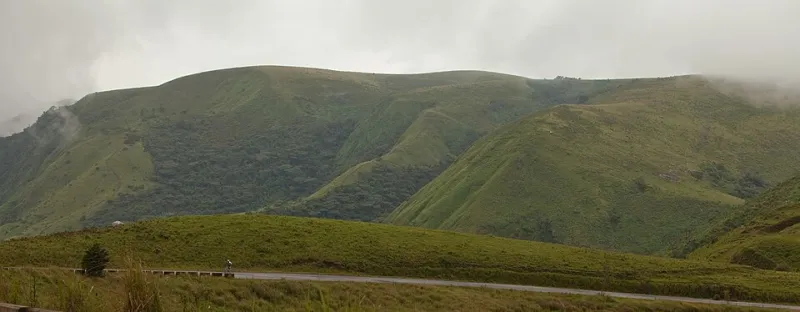
Photo: Inyang Effiong, CC BY-SA 4.0, via Wikimedia Commons
Every gran fondo has that one stretch of road riders talk about for months afterward. At the MSU Gran Fondo, it's not one stretch — it's a series of them, stacked across some of the most dramatic terrain Montana has to offer. Whether you're chasing a podium or just chasing your own PR, knowing what's coming is half the battle. Here's how the course unfolds, mile by mile.
The Calm Before the First Kick
The opening 15 miles are deceptively friendly. Rolling terrain, a tailwind that's usually on your side, and wide shoulders make this the stretch where groups form and legs find their rhythm. Veterans will tell you the same thing every year: don't burn matches here. The field always goes out hot, and the riders who let the surge happen without them are the ones still pedaling smoothly at mile 60.
First rest stop comes around mile 18 — hit it even if you don't think you need to. Montana's dry air has a way of sneaking dehydration past you.
Climbing the Bear Canyon Grind
Mile 22 is where the day gets honest. The Bear Canyon Grind runs roughly six miles at an average of 5–6%, but the real story is the pitches — two sustained sections that nudge past 8% with a ramp near the top that's steeper than it looks in photos.
Gearing advice from the locals: Bozeman-area coaches consistently recommend a compact crankset with an 11–34 cassette for this route. If you're showing up on a 53/39, you're racing the mountain, not the field. Spin early, settle into a cadence you can hold, and remember that the elevation already has your heart rate running a few beats higher than usual.
This is where the front group typically shatters. If you're racing, position near the front of the pack before the base — being trapped behind wheels on a climb is how gaps become unrideable.
The Plateau Traverse
After the summit, the course rolls across a high plateau for about 12 miles. It looks flat on the profile sheet. It is not flat. A steady 1–2% false flat into a prevailing headwind makes this section a quiet leg-burner, and it's where unraced legs start to complain.
Ride it in rotation if you've got a group, tuck in tight, and keep eating. Aim for 60–90 grams of carbs per hour from here on out — gels, chews, whatever your gut has trained on. Rest stop two at mile 47 is your last easy chance to top bottles before the main event.
The Main Event: Big Sky Ascent
At mile 58, the road turns upward and doesn't let go for nine miles. Average gradient sits around 6%, but the Big Sky Ascent is really three climbs stitched together with short false-flat recoveries — a rhythm that punishes anyone who surged too hard on the first pitch.
Past finishers describe the middle section, between miles 63 and 66, as the mental crux. The trees thin out, the switchbacks stack up, and the summit never seems to arrive. The advice from repeat riders is universal: break it into thirds. Get to the mile-63 marker, reassess, repeat.
Pacing tip: If your power meter says you can hold 200 watts for an hour, hold 190 here. The last two miles steepen above 7%, and that's where everyone who went too early pays for it.
The Descent and the Long Road Home
What goes up comes down fast — a sweeping, mostly straight descent drops nearly 3,000 feet over 11 miles. Check your bolts, keep your hands in the drops, and let the bike run on the straights. Cold air at speed is a real factor at elevation; a light wind vest pays for itself immediately.
The final 15 miles back to the finish are gently downhill with one last short kicker at mile 88, thrown in seemingly out of spite. Save a little something for it. The finish-line crowd, the local brew on tap, and the view of the Bridgers will taste better if you do.
Where Races Are Won and Lost
Ask any past finisher and you'll get the same answer: the Gran Fondo is decided on the Big Sky Ascent, but it's lost on the plateau traverse and in the first 15 miles. Ride patient, fuel early, gear low, and let the mountain come to you. Montana rewards the smart rider every single time.
Registration for this year's edition is open now — and the early-bird pricing won't wait as long as the climb does. See you at the start line.