Where Your $150 Actually Goes: A Line-By-Line Look at Fondo Registration Money
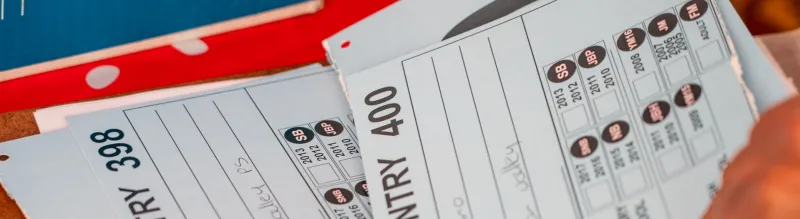
Photo: cycling event registration packet and race number flat lay, via www.entries.thebicycleleague.co.za
Let's be honest. When you drop $150 on a gran fondo entry, there's a little voice in the back of your head that says: for a t-shirt, a beer, and the privilege of suffering up a mountain?
We get it. From the outside, a bike race looks like a bunch of people riding on public roads. How much could that possibly cost?
Turns out, quite a bit. We talked with a few local race directors and event organizers around Montana to get a realistic picture of where the money actually flows — and the answer surprised even some of our seasoned riders.
The County Doesn't Close the Road for Free
Here's the line item most people never think about: road permits.
Your fondo route isn't a closed course. You're riding on Gallatin County roads, state highways, maybe a forest road or two — and every one of those jurisdictions wants paperwork, coordination, and often cold, hard cash. Traffic control plans, approved detour routes, signage requirements, and sometimes paid flaggers at tricky intersections all add up fast.
One organizer told us permitting and traffic control for a single rural route can run into five figures before a single rider pins a number on. That's not bureaucracy for bureaucracy's sake — it's the cost of keeping 400 cyclists and 200 pickup trucks coexisting on the same stretch of pavement.
Insurance: The Boring Line Item That Saves Everybody
Next up, and no less exciting: liability insurance.
Every permit application, every venue agreement, every landowner handshake comes with an insurance requirement attached. A one-day event policy for a mass-participation cycling event isn't cheap, and it's non-negotiable. Skip it, and the event doesn't happen — full stop.
The upside? That policy is also what protects you. If a driver makes a mistake or a rider goes down in the peloton, you want the event to be the kind that had its paperwork in order.
Timing, Timing, Timing
That chip in your number plate? It's rented, along with the timing mats, the software, and the technician who flies in (or drives over from Bozeman or Missoula) to make sure your finish time is accurate to the second.
Professional timing for an endurance event typically runs several thousand dollars. Sure, we could time things with a guy, a clipboard, and a stopwatch — but when you're chasing a PR or arguing about who took the final sprint, you'll be glad we didn't.
Feed Zones Don't Stock Themselves
Bananas don't grow in Montana in June, friends.
Feed zone budgets cover the food, the coolers, the ice, the tables, the tents, the trash hauling, and — critically — the volunteers' supplies. Water alone for a hot day on a 100-mile course is measured in hundreds of gallons. Multiply that across four or five aid stations, and the grocery bill starts looking like a small wedding.
And no, volunteers don't get paid, but feeding them, hydrating them, and thanking them properly is a cost the good events budget for gladly.
The Vehicles You Hope You Never Need
Every fondo needs a small fleet: SAG wagons sweeping the course, roving mechanic trucks, lead and follow vehicles, and — the big one — EMT staffing.
Medical coverage isn't optional, and it isn't cheap. Certified EMS crews, ambulance standby, and a communication plan that lets a rider at mile 70 reach someone with a radio in minutes — that's a serious chunk of every entry fee. It's also the line item we hope you never personally benefit from, and the one we'd never cut.
So Where Does the Rest Go?
After permits, insurance, timing, food, vehicles, medics, port-a-johns, marketing, registration software fees, and the finish-line beer (yes, it's in there — we're not monsters), the margin on a well-run fondo is thin. Most community events pour leftover revenue right back into next year's race, local cycling advocacy, trail maintenance, or junior riding programs.
So the next time you click 'register' and wince at the total, remember: you're not buying a t-shirt. You're buying a closed-permitted route, a chip-timed result, a stocked feed zone, a SAG driver who'll carry your bike with a smile, and an EMT you'll hopefully never meet.
Honestly? It might be the best $150 you spend all summer.