Wheels Down, Manners Up: How to Share the Road Without Being That Rider
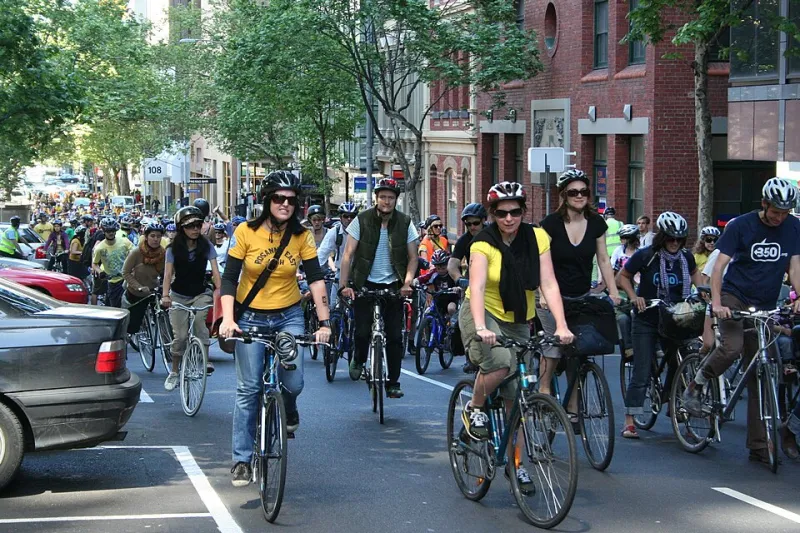
Photo: Takver from Australia, CC BY-SA 2.0, via Wikimedia Commons
Somewhere around mile 30 of any gran fondo, the field sorts itself out. The fast groups have left. The climbers have gone backward. What's left is a rolling negotiation of strangers — forty or fifty riders who've never met, taking turns on the front at 24 miles an hour, trusting each other with their collarbones.
It's beautiful when it works. It's a pileup waiting to happen when it doesn't. And the difference between the two isn't fitness or bike handling. It's manners.
Ask Before You Sit In. Seriously.
The single fastest way to make an enemy at a fondo is to grab some group's wheel uninvited. You didn't earn that spot. You didn't contribute to the pace. You just showed up and started drafting like the bunch is a public utility.
The fix takes four seconds. Roll up alongside, make eye contact, and say something like "mind if I jump in?" Nobody has ever said no. That's the whole thing. The barrier to entry is a sentence, and yet every fondo has at least one guy who treats every group on the road as his personal pace line.
Once you're in, contribute. Take a pull. Even a short one. Sitting on the whole time and then attacking the group at the first sign of a climb is the cycling equivalent of ordering separate checks after someone else picked up dinner.
The Rotation: Short Pulls, Smooth Hands
If the group is rotating properly, the etiquette is simple:
- Pull through and over. When your turn's done, drift off the front to the windward side and swing back smoothly. No sudden swerves.
- Keep pulls short. Thirty seconds to a minute. Long pulls tire you out and make the person behind you antsy.
- Don't skip turns and then attack. If you're cooked, sit at the back and say so. "I'm done, closing it down" is a perfectly honorable sentence.
- Never half-wheel. If you're on the front, hold the speed your partner set. Riding half a wheel faster to prove something is how pace lines disintegrate and friendships end.
Call It Out — Everything, Always
Riders at the back are blind. They can't see the gravel patch, the dead raccoon, the pothole that could eat a 28mm tire whole. Your voice is their vision.
"Hole!" "Gravel!" "Car back!" "Slowing!" — shout it early, point if you can, and keep it short. "Pothole!" works. "There appears to be a hazard in the roadway ahead, riders" does not.
And here's the one nobody tells beginners: don't overlap wheels. If your front wheel touches the rear wheel of the person ahead, you're going down, and so might six people behind you. Leave a slight offset when the pace gets nervous. Watch the road two or three riders up, not just the wheel in front of you.
When to Sit On and When to Rotate
Not every group is a working pace line. Sometimes the right move is to tuck in, shut up, and enjoy the free ride. A few guidelines:
- Headwind, flat roads, big group: Rotate. Everyone benefits, everyone shares the work.
- Tailwind or downhill: The draft matters less. Sit on, rest, save it for the next climb.
- Group riding way harder than you want to go: Let them go. Chasing a group that's above your threshold is how you end up walking the final climb to the finish.
- Mixed-ability group: Take longer pulls at the back, shorter ones up front, and communicate. "I'll sit on today, legs are toast" earns you more goodwill than faking it and blowing up.
Descending and the Art of Not Being a Menace
We've written before about how the downhills are actually the scary part of a Montana fondo, and group riding amplifies that. On a fast descent with a group:
- Don't pass on the inside.
- Don't brake hard when there's someone on your wheel. Feather the brakes and drift back instead.
- Leave more space than feels natural. The person behind you is trusting you not to do anything dumb.
And when the road flattens out and someone attacks over a rolling rise? Let them have it. It's a fondo, not a WorldTour stage. Nobody's contract is on the line.
The Golden Rule of the Bunch
Every experienced fondo rider will tell you some version of the same thing: ride the pace line like you'd want someone to ride yours. Call the hazards. Take your turn. Say thanks when someone gives you a pull. Wave at the volunteers at the feed zone even if you don't stop.
The bunch is a temporary society, formed at mile 30 and dissolved at the finish line. For three or four hours, you and thirty strangers are responsible for each other's skin. Treat it that way, and you might roll into the finish with new riding buddies — and all your collarbones intact.
See you out there. Mind if I jump in?