That Climb You Always Turn Around On? Ride It Every Week.
Every rider in Bozeman has one. Maybe it's the steep pitch up Storm Castle Road that you've turned around on twice. Maybe it's the stretch of Highway 86 north of town where the wind funnels down the valley like it has a personal grudge. Whatever it is, you know the feeling: you roll up to it, glance up the grade, and quietly talk yourself into the flatter option instead.
Here's the uncomfortable truth about the MSU Gran Fondo: the course doesn't care about your comfort zone. It will find the thing you avoid and serve it to you at mile 60, with fatigue already in your legs. So the smartest thing you can do between now and race day is simple, if not exactly fun — go find the climbs and conditions you hate, and ride them on purpose.
Why We Avoid What We Need Most
Avoidance feels rational in the moment. There's always a good excuse: you're tired, it's windy, you're short on time. But avoidance is also self-reinforcing. Every time you skip the steep grind, it gets a little more intimidating in your head. Meanwhile, the fitness gap between what you train and what the fondo demands keeps quietly widening.
Sports psychologists call this the "avoidance loop," and cyclists live in it constantly. You gravitate toward the rides where you feel strong — the flat valley spins, the group rides where you can sit in the draft. You get fitter, sure, but only in the shape of the rides you already like. A gran fondo in the Gallatin Valley doesn't reward that shape. It rewards range.
The Montana Problem: You Can't Fake This Terrain
Montana adds a wrinkle most training plans ignore. Our climbs aren't just long — they're exposed. Sustained grades out toward Hyalite, the rollers heading up toward the Bangtails, the long drags on the outskirts of the valley where there's nothing between you and the sky. No tree cover, no windbreak, no bailout point halfway up. If the wind is blowing, you're riding in it, period.
That's why training only in ideal conditions is a trap. The rider who's never pedaled into a 20 mph headwind is going to have a rough afternoon in June, no matter how strong their numbers look on a calm day. Headwinds are a distinct skill — pacing, gearing, body position, and above all, patience. You don't develop that by accident.
Building Your 'Hate Hill' Progression
Pick the one climb or route you genuinely dread. Not a monster — something you could technically do but always find a reason not to. Then run it through this simple eight-week progression:
Weeks 1–2: Ride it once, slowly. No stopwatch, no power targets. The only goal is to get to the top without turning around. Break the climb into landmarks — the cattle guard, the switchback, the second mailbox — and just tick them off one at a time.
Weeks 3–4: Ride it twice a week. Once at an easy, conversational effort, once at a harder tempo where you're breathing big but not dying. You're teaching your legs that this grade is survivable, not special.
Weeks 5–6: Add a repeat. Ride up, spin back down, go again. Two efforts is where the real fitness gets built. This is also where most riders discover the climb is 30% shorter than the version in their head.
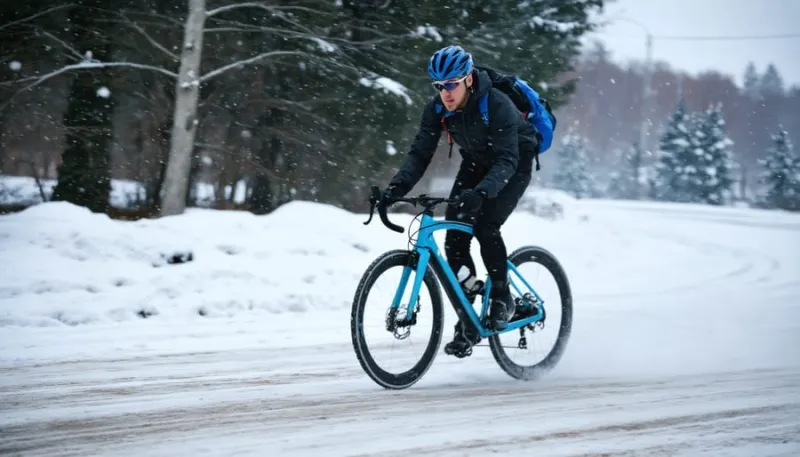
Weeks 7–8: Seek out the ugly day. Do your repeats deliberately when it's windy or cold. If the forecast is bad, that's not a reason to reschedule — that's the workout. Race day won't be perfect either.
The Wind Road Deserves Its Own Day
Climbs get all the attention, but headwinds break more fondo rides than grades do. Pick a road in your area that reliably gets hammered by wind — around Bozeman, you know which ones they are — and ride it out-and-back once a week. Out into the wind, home with the tailwind as your reward.
The key is learning to settle in. Beginners fight headwinds like they're sprinting; experienced riders gear down, drop the torso, and find a rhythm they can hold for an hour. That's a skill, and like all skills, it only comes from reps in the real thing.
What Happens on Race Day
Here's the payoff. Somewhere around mile 55 of the Gran Fondo, the course will pitch upward into the wind, and the rider next to you will groan. You won't. Not because you're tougher — because you've been here before. You'll know exactly what gear to shift into, how to breathe, where to look, and how long this kind of effort takes out of your legs.
That familiarity is worth more than any fitness gain. Fear drains legs; familiarity saves them. Every repeat on your least favorite climb is a deposit against the bonk, the blowup, and the long dark ride home.
So this week, skip the usual loop. Ride the road you always turn around on. Then do it again next week. By the time the start line rolls around, your worst enemy will be your best-remembered mile — and that's exactly where fondos are won.