Not Your Buddy's Century Ride: What You're Actually Signing Up For at a Gran Fondo
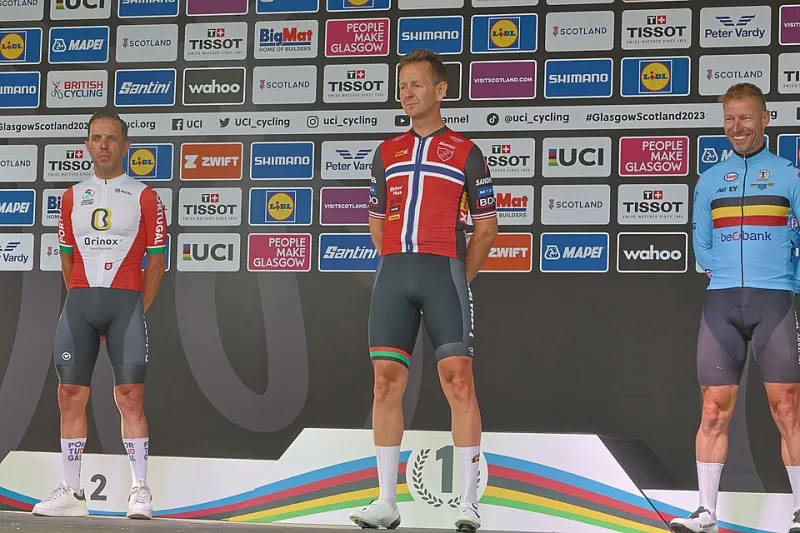
Photo: Cs-wolves, CC BY-SA 4.0, via Wikimedia Commons
Every cyclist has a friend who's done a century. Hundred miles, a bag of gas station snacks, a photo of the odometer, done. So when you tell that friend you're dropping real money on a gran fondo registration, you're going to get the question: Isn't that just a fancy century?
It's not. And the difference matters more than you'd think.
The Format Is the Point
A gran fondo — Italian for "big ride," and yes, it's a big deal in Italy — borrows more from running events than from your local club century. You get a mass start, a closed or controlled course, a chip timing system, and a finish line that people actually care about.
The most important piece: timed segments. At the MSU Gran Fondo, your clock isn't running the whole day. Instead, specific sections — usually the climbs — are timed individually. You cruise through the valleys chatting with your buddies, then the segment hits and suddenly that friendly conversation is over and you're redlining past someone who's been quietly drafting off you for twenty minutes.
It changes the psychology of the entire day. A century is one long, flat effort of willpower. A fondo is a series of contained battles with recovery baked in between them.
The Start Line Is a Scene
Roll up to a typical century ride and the start is a loose gaggle of cyclists trickling out of a parking lot between 7 and 8 a.m. whenever they feel like it.
Roll up to a gran fondo and you've got corrals, announcements, music, nerves, coffee, and several hundred people in matching team kits doing pre-ride rituals that look suspiciously like superstition. The mass start is genuinely one of the best parts of the format — there's a hum of energy when the whole field rolls out together that you just don't get from a solo 6 a.m. departure.
Fair warning: the first few miles of a fondo are fast. Faster than you think. Everybody's fresh, everybody's excited, and the group moves like a river. Sit in, stay relaxed, and let the race come to you.
Aid Stations Are a Different Species
On a self-supported century, "aid station" means a folding table with a bag of pretzels if you're lucky.
At a fondo, the feed zones are staffed, stocked, and strategically placed — usually before and after the big timed segments, when you need them most. We're talking real food, real hydration, real people who've been standing in the sun since dawn so you don't have to think about anything except pedaling.
The corollary to this: you can ride lighter and harder. Knowing support is 25 miles apart means you can run fewer bottles, carry less food, and actually race the segments instead of managing your inventory like it's a camping trip.
So Is It a Race?
Here's the honest answer, because you deserve one: it's whatever you want it to be.
The timed segments mean there are results, rankings, and — at bigger fondos — qualifying pathways to world championship events. If you're competitive, that structure is real and the racing is real. People train specifically for these climbs.
But the majority of the field isn't racing for a podium. They're chasing personal numbers, riding with friends, or just seeing if Montana's mountains will let them through. The beauty of the format is that both groups exist on the same course, at the same time, eating the same cookies at the same aid stations.
The Cost Question, Answered Straight
Yes, a fondo costs more than a century. Sometimes a lot more. You're paying for permits, traffic control, timing infrastructure, medical support on course, and the feed zones — none of which are cheap in rural Montana.
What you get back: a course that's actually managed, sag support when things go sideways, a finish-line celebration with food and beer that's worth sticking around for, and the simple luxury of not navigating your own route at mile 80 with dead legs.
For a destination event — and Montana is absolutely a destination — the math works. You're not buying a bike ride. You're buying a full day in the Gallatin Valley with the logistics handled and a finish line worth crossing.
Why It Matters for Your First One
If you've done centuries and you're wondering what's next, the fondo format gives you something a long solo ride can't: structure to compete against yourself. Those timed segments turn a long day into a series of measurable efforts, and you'll learn more about your fitness in one fondo than in three centuries.
And if you've never done any of it? A gran fondo is honestly a better first big event than a century. Support everywhere, a clear route, people around you the whole way, and a finish line with your name on it.
The mountains don't care which format you pick. But the experience? Night and day.